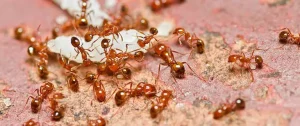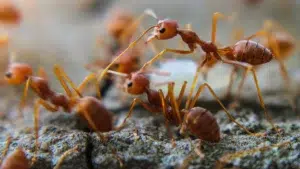


If you have kids or pets and they’ve ever come inside from a beautiful afternoon playing in the yard only to find them covered in intense, itchy red welts, you’ve likely met the neighborhood’s smallest bullies: chiggers. In Plano, Allen, Frisco, and McKinney, these microscopic mites are a year-round reality, especially during our humid months when they seem to be everywhere.
At CitiTurf, we believe you shouldn’t have to perform a “post-yard inspection” every time you walk to the mailbox. For over 20 years, we’ve been helping our neighbors across Collin County navigate these “red-hot” invaders with a professional system rather than DIY guesswork.
What Exactly are Chiggers? (The Invisible Hitchhikers)

We could call them Trombiculidae, but who calls them that —chiggers are basically microscopic members of the spider family that treat your skin like an all-you-can-eat buffet. Unlike many common household pests that require interior pest control, chiggers are strictly an outdoor nuisance that hitches a ride on your skin rather than nesting in your kitchen or attic.”
The Size: They’re tiny, reddish-orange mites that are nearly invisible to the naked eye. You won’t see them coming, but you’ll definitely feel the results.
The Bite: You won’t feel a thing when they first attach to you or your pets. It’s only after a few hours that the intense itching and red bumps appear, usually in clusters where your clothing fits snugly—ankles, waistline, or behind the knees.
Fast Reproduction: In the DFW metroplex, these pests can go through up to four generations in a single year, with activity peaking in April and May. But here’s the catch: our North Texas climate lets them thrive almost year-round, especially in the shaded, humid pockets of your landscape.
The “Hiding Zones”: Where the Itch Begins
Chiggers are “climbers.” They don’t fly or jump—they scale the tops of vegetation and wait for a passing host like you, your kids, or your dog to brush by.
Preferred Environments: They love cool, damp, and shaded spots where sunlight is limited and moisture lingers.
Common North Texas Hotspots:
- Tall grass and unmanaged weeds
- Dense bushes, overgrown shrubs, and flower beds
- Shady fence lines and wooded edges
- The thick thatch layer in St. Augustine and Bermuda lawns
- Mulched areas under trees and around foundation plantings
With spring blooming in North Texas, keep your eyes out for these 5 pests—starting with the nearly invisible chigger. Regardless of where you live, we see the same pattern: chiggers congregate wherever spring shade meets moisture. If you’ve got mature trees (especially in established neighborhoods like Stone Creek Estates or Heritage Ranch), you’ve got chigger territory. While these mites stay outdoors, many other spring invaders try to move inside this time of year, making it the perfect time to audit your interior pest control needs. Chiggers are especially problematic in the larger lots of Lucas, Fairview, and Parker. Because their life cycle is so fast, a standard, one-and-done pest control won’t cut it, you need a strategy that specifically targets their spring breeding grounds.
Natural Deterrents vs. Professional Reality
While you can make your property less inviting, “natural” methods are often a temporary fix for a permanent problem.
The Sunlight Strategy: Mow regularly and keep your grass at the proper height for your turf type. Chiggers actively avoid sunlight, so exposing the soil helps drive them out.
Clear the Clutter: Removing leaf piles, excess mulch, and yard debris improves airflow and reduces the moisture they crave. This is especially important if you’re also dealing with other pests like fire ants or fleas.
Manage the Thatch: A thick thatch layer in your lawn creates the perfect humid hideout for chiggers. Regular fertilization and lawn health maintenance helps control thatch buildup naturally.
Why Professionals are Essential: DIY sprays often fail because chiggers are experts at hiding in the deep thatch of your lawn and in your landscape beds. To truly eliminate them, you have to hit all life stages—including the eggs hidden in the soil—with professional-grade products applied at the right intervals. While DIY remedies often fail to break the life cycle, our pest control service uses a science-based approach to eliminate the specific ‘hiding zones’ where chiggers thrive.
The CitiTurf Strategy: The Two-Treatment Guarantee

Our chigger control program is built for lasting results, specifically designed for the thick thatch and humid conditions found in Plano, Allen, Frisco, McKinney, and throughout Collin County. Instead of just scratching the surface, we focus on the dense layers of your lawn and landscape beds where these mites actually live.
Double Coverage: We provide two professional treatments spaced 14 days apart to ensure full eradication. This isn’t arbitrary—it’s science.
Breaking the Cycle: This specific timing is critical because it catches any new chiggers that hatch after the first visit before they have a chance to lay more eggs. The first treatment eliminates active mites and begins breaking down egg populations. The second treatment catches the stragglers and ensures the cycle is truly broken.
Indoor & Outdoor Protection: Because chiggers are “hitchhikers,” they can enter your home on pets or clothing. We treat lawns, flower beds, and entry points—and if they’ve already moved inside, we can treat the interior of your home as part of our comprehensive pest control services.
Family & Pet Safe: Our professional-grade formulas are 100% safe for your kids and pets to get back to playing as soon as the treatment is completely dry—usually within 2-3 hours.
What to Expect:
- Day 1: Professional application to all affected areas
- Days 2-14: You’ll notice dramatically fewer bites and existing bites will begin to heal
- Day 14: Second treatment eliminates any remaining populations
- Days 15-30: Complete eradication and confidence to enjoy your yard again