
Every summer, North Texas homeowners notice the same thing: bright-green blades shooting up taller and faster than the rest of the lawn.
Your first instinct? Grab it and yank.
And that’s exactly what you shouldn’t do.
But does pulling nutsedge make it worse?
Unfortunately, yes. And it’s one of the most common lawn care mistakes we see across Collin County, from Frisco to McKinney.
Nutsedge in lawn areas isn’t just annoying. It’s a sign of something happening underground that pulling can’t fix. In fact, pulling nutsedge actually triggers the plant’s built-in survival response, causing it to spread even faster.
This guide breaks down what nutsedge is, why it shows up in North Texas lawns in summer, and what actually works to get rid of it so you can stop fighting a losing battle.
Quick Answer: Why Pulling Nutsedge Makes It Worse
When you pull nutsedge, you’re only removing the top of the plant. The root system stays behind.
Worse, the underground nutlets attached to those roots activate and start producing new plants. A single nutsedge plant can produce hundreds of nutlets, and pulling it can trigger them to sprout.
That’s why pulling nutsedge makes it worse almost every time. You’re not eliminating the problem. You’re multiplying it.
What Is Nutsedge (and Why It’s Not “Just Grass”)
So what is nutsedge, exactly?
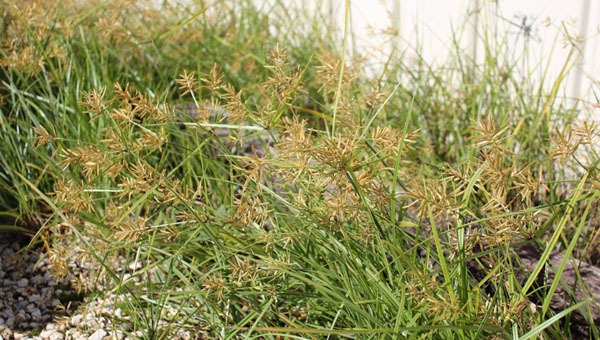
It’s a perennial sedge, not a grass, that shows up in lawns across North Texas every summer. It looks similar enough to turf that many homeowners don’t notice it right away, but once it spreads, nutsedge becomes hard to ignore.
There are two main types you’ll see in North Texas:
- Yellow nutsedge: The most common variety in North Texas. Lighter, yellow-green color and grows faster than surrounding grass.
- Purple nutsedge: Less common locally, but more aggressive and spreads more densely underground.
Both types reproduce below the surface, which is exactly why pulling them doesn’t work. According to the Texas A&M AgriLife Extension, nutsedge is one of the most difficult weeds to control in southern lawns because of its underground growth system.
The Real Problem Is Underground: Rhizomes and Nutlets
When homeowners ask, “Can you just pull nutsedge out and be done with it?” this is where that idea breaks down.
You’re only removing what you can see.
The real problem is happening underground:
| Structure | What It Does | Why Pulling Doesn’t Remove It | How It Causes Regrowth |
| Rhizomes | Horizontal underground stems that connect plants and spread outward | They grow 8–14 inches deep and break off when pulled | Each broken segment can produce a new plant |
| Nutsedge nutlets (tubers) | Small, round storage organs attached to the root network | They sit deep in the soil — well beyond what you can reach by hand | A single plant can produce hundreds of nutsedge tubers, each capable of sprouting |
| Basal bulbs | Thickened base at the stem | Snaps off at or below the soil surface when pulled | Regenerates a new shoot within days |
This is why pulling nutsedge is counterproductive. Every time you pull, you disturb the soil and break connections between nutlets and rhizomes — which signals dormant nutlets to activate. One plant becomes five. Five becomes twenty.
Why Nutsedge Shows Up in Summer
If nutsedge seems to appear overnight in summer, there’s a reason.
It activates when soil temperatures reach around 77°F, which typically happens in North Texas by late April or early May.
But heat alone isn’t the trigger. Moisture is the real driver.
Nutsedge thrives in wet conditions, which is why it often shows up in:
- Overwatered lawns
- Areas with poor drainage
- Compacted soil
- Thin or stressed turf
- Spots with irrigation leaks (even small ones create wet zones where nutsedge takes hold)
If you’re seeing clusters of nutsedge, there’s usually a moisture issue underneath it. We see this all the time in Frisco, where clay soil and overwatering can create ideal conditions for nutsedge.
Check to see if your sprinkler system is creating wet spots. That’s often ground zero for nutsedge, especially in newer developments where irrigation systems tend to overwater. Fixing the moisture issue is just as important as treating the weed itself.
What to Do Instead of Pulling
Once you understand why pulling nutsedge makes it worse, the next step is knowing what actually works.
Step 1: Fix the moisture problem first
Start with the conditions that allowed it to grow in the first place. Adjust your watering schedule, repair leaks, and improve drainage where needed. If your lawn mowing height is too low, raise it. Taller grass shades the soil and reduces the moisture buildup nutsedge depends on.
Step 2: Treat nutsedge at the right time
Nutsedge requires targeted post-emergent treatments designed specifically for sedges. These treatments move through the plant and reach the underground tubers.
Timing matters. The most effective window is when the plant is actively growing, typically late spring through midsummer in North Texas.
According to Purdue University Extension, properly timed applications are the most reliable method for controlling nutsedge.
Step 3: Plan for repeat applications
One treatment is rarely enough. Because nutlets can stay dormant in the soil for years, most lawns require multiple applications to fully control them.
When to Treat for Best Results
In North Texas, the typical treatment window looks like this:
- Late May through June: First application while nutsedge is young
- July: Follow-up treatment to target new growth
- August (if needed): Third application for heavier infestations
Starting early makes a major difference. Waiting until late summer means the plant has already reproduced underground, which means you’ll be fighting a much bigger problem next year.
How to Keep Nutsedge From Coming Back
Nutsedge doesn’t go away on its own, and it’ll come back every year if you don’t stay ahead of it.
Here’s what helps:
- Water less frequently, but more deeply
- Maintain thick, healthy turf
- Avoid mowing too short (keep grass around 3–3.5 inches in summer)
- Aerate compacted soil
The biggest mistake homeowners make is stopping too soon. The lawn may look better, but the underground nutlets are still there.
When It’s Time to Call for Professional Weed Control
If you’ve been battling nutsedge in your lawn for more than a season and it keeps returning, it’s usually time to call in a professional weed control service.
Here’s why:
- Professional treatments are more effective than most retail options
- Applications are timed correctly based on growth patterns
- Ongoing programs ensure follow-up treatments happen when they should
Can you pull nutsedge and hope it goes away? You can try. But like we’ve talked about, it only makes the problem worse. Targeted nutsedge treatment from a trained professional is the most reliable path to a healthy lawn.