

Here’s something nobody tells you when you buy a house in North Texas: your lawn is in a quiet, ongoing war with a fungus that lives permanently in the soil beneath it. Most of the time the fungus just sits there doing nothing. But every fall — right around the time DFW weather starts doing that thing where it’s 80 degrees on Tuesday and 55 on Thursday — it wakes up.
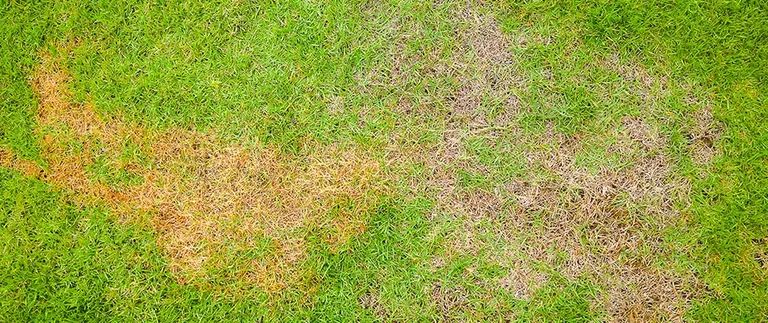
And you’ll know, because one morning you’ll walk outside with your coffee and spot circular patches of yellow and brown grass that weren’t there last week. They look dark and matted at the base. They’re spreading. Your neighbor’s yard is fine, which makes it worse.
What you’re looking at is large patch disease, a fungal infection caused by Rhizoctonia solani that specifically targets the warm-season grasses most of us grow here — the St. Augustine and Zoysia that dominate yards from Plano and Frisco to McKinney and Allen. It’s one of the most common fall and spring lawn care problems our team at CitiTurf diagnoses every year, and the good news is it’s very treatable when you catch it early.
What Is Large Patch Disease?
Let’s start with the uncomfortable truth: the fungus causing this problem is already in your yard. It’s been there since before you moved in. Rhizoctonia solani is a soil-borne pathogen that exists in basically every lawn across DFW. The vast majority of the time, it’s dormant and harmless — your grass doesn’t even know it’s there.
The trouble starts during the narrow windows when soil stays damp and overnight temps drop into the 50s and 60s. That’s when the fungus goes from passive roommate to active problem. It attacks the leaf sheath — the point where each grass blade connects to the stolon (the runner sitting on the soil surface). As that tissue rots, blades detach easily, leaving brown or black spots and thinning turf.
The disease then spreads outward in expanding circles, which is where the name comes from. According to the Texas A&M AgriLife Extension, Large Patch is one of the most damaging turfgrass diseases in the southern United States, with individual patches ranging from a few inches to several feet in diameter. Leave it alone and it comes back in the same spots next year, usually worse.
A quick note on naming: You might hear people use “Brown Patch” and “Large Patch” interchangeably. They’re actually different — same pathogen, different grasses. Brown Patch hits cool-season grasses (fescue, ryegrass) in summer heat. Large Patch hits warm-season grasses (your St. Augustine and Zoysia) in cool, damp conditions. If you have a DFW lawn, you’re almost certainly dealing with Large Patch. For more on the summer version, see our brown patch treatment page.
Common Signs & Symptoms of Large Patch
The tricky thing about large patch disease is that early on, it just looks like your grass is struggling — which, in North Texas, could mean fifteen different things. Here’s how to tell this apart from drought stress, grub damage or your dog’s favorite bathroom spot:
- Circular or irregular patches of yellow, orange or brown grass, anywhere from one foot to several feet across. The shape is the giveaway — nature doesn’t usually kill grass in neat circles.
- A dark, water-soaked look at the base of affected blades. Pull gently on a blade and it slides right out. Healthy grass resists; infected grass gives up immediately.
- Yellow patches in grass that form a distinct ring or “smoke ring” border around a greener center, especially visible in early morning when dew is present.
- Brown spots in lawn areas that were perfectly healthy just a few weeks earlier, often in shaded or low-lying sections.
- Thinning turf that doesn’t recover after rain or watering the way the rest of the yard does.
If you spot any combination of these symptoms in your DFW lawn between September and May, there’s a strong chance you’re dealing with patch disease in lawns caused by Large Patch.
When and Why It Appears
Think of large patch fungus like a bear in hibernation — it’s always there, but it only causes problems during specific conditions. In DFW, those conditions line up almost perfectly with our fall and early spring weather: late September through November, then again from February through April.
The specific triggers include:
- Temperature sweet spot: Daytime highs in the 70s with nighttime lows in the 50s. That’s basically every week of October in North Texas.
- Persistent moisture: Overwatering, heavy rain or poor drainage. DFW’s clay soils are notorious for holding water — they’re doing the fungus a favor and you don’t even know it.
- Shade and compaction: Areas under trees or in low spots that never fully dry out between waterings. Neighborhoods with heavy tree cover — common in Richardson, Fairview and Prosper — tend to see more persistent problems.
- Late-season nitrogen: Fertilizing with high-nitrogen products in fall pushes tender new growth right when the fungus is most hungry for it. It’s like setting out a buffet.
- Mowing too short: St. Augustine should be kept at 2.5–3.5 inches and Zoysia at 1–2 inches. Scalping weakens the turf and rolls out the welcome mat.
How CitiTurf Treats Large Patch
So your lawn has it. Now what? Here’s the straightforward version: large patch fungus treatment works, it’s not complicated, and you don’t need to tear up your yard.
At CitiTurf, we use a professional-grade systemic fungicide that’s the same active ingredient recommended by university turf programs across the South. It works by shutting down fungal cell growth at the infection site. Here’s how the process looks:
- Inspection: A CitiTurf lawn disease specialist comes out and evaluates every affected area on your property. No guessing, no phone diagnoses.
- Targeted treatment: We apply the fungicide directly to each patch and the surrounding buffer zone in a single visit.
- Protection window: Each application gives you roughly three weeks of active protection.
- Follow-up if needed: If the disease persists or new patches show up, we come back. In a bad DFW season with weeks of rain, two to three applications are common.
Because this fungus reappears in the same spots year after year, early detection and prompt large patch fungus treatment are the best way to prevent serious turf loss. We serve homeowners throughout the DFW Metroplex — Plano, Allen, McKinney, Frisco, Fairview and beyond.
What to Expect After Treatment
Here’s where we need to manage expectations, because this trips people up. The treatment stops the damage. It does not regrow the grass. Those are two different things, and they happen on two different timelines.
During fall and early spring, the fungicide halts the pathogen so it can’t eat any more of your lawn. But the brown or bare patches that are already there? They’re going to sit tight through winter looking rough. That’s completely normal and it doesn’t mean the treatment failed.
For most DFW lawns, recovery kicks in during late April through June, and treated areas typically recover fully within one growing season.
“I tell homeowners to think of it like putting out a fire,” says Ryan. “We stop the damage. The lawn rebuilds itself once conditions are right. You just have to be patient through the winter.”
How to Help Prevent Large Patch
You can’t eliminate Rhizoctonia solani from your soil — it’s there permanently, like property taxes. But you can make your lawn a much less hospitable place for it. Here’s what reduces the chances of patch disease in lawns coming back next season:
- Dial back irrigation in fall. Cut watering frequency as temperatures drop in September and October. DFW’s clay soils hold moisture way longer than most homeowners realize — you’re probably overwatering and don’t know it.
- Fix drainage problems. Address low spots, compacted areas and sections where water pools after rain. This is especially common in newer DFW subdivisions where builder-grade grading leaves problem areas that nobody told you about.
- Stop nitrogen early. No high-nitrogen fertilizer after September. Pushing lush new growth in fall is essentially feeding the fungus a steak dinner.
- Mow at the right height. St. Augustine at 2.5–3.5 inches, Zoysia at 1–2 inches. Every time you scalp the lawn you’re making it easier for the fungus to get a foothold.
- Keep the turf thick. Pair your disease management with solid weed control for lawns so the grass stays dense and competitive. Thick turf naturally crowds out fungal pressure.
None of this guarantees you’ll never see large patch disease again — the pathogen isn’t going anywhere. But good cultural practices dramatically lower the risk and severity of future outbreaks.
Contact CitiTurf Today
The math on this one is simple: the earlier you act, the less turf you lose. If you’re seeing discolored or thinning patches in your DFW yard this fall or spring, don’t sit on it hoping for the best. That strategy has a zero percent success rate with large patch fungus.
CitiTurf’s lawn disease specialists serve homeowners across the North Dallas area, specifically Collin County. We’ll diagnose the problem on-site, apply professional-grade treatments and help you build a plan to protect your turf through the season and beyond.