

Stepped outside after a rain and found mushrooms popping up in the lawn? Good news: they usually don’t mean your grass is dying. Here’s how to get rid of them, with tips built for North Texas clay soil and St. Augustine or Bermudagrass lawns.
Quick Answer:
To get rid of mushrooms in your lawn, put on gloves, pull them up at the base, and toss them in the trash, especially before kids or pets head outside. Mushrooms are usually harmless to your grass. They’re a sign of too much moisture or decaying wood underground. To keep them from coming back, cut back on watering, fix sprinkler leaks or soggy spots, and aerate compacted clay soil. Skip the fungicides and home remedies like vinegar; they won’t fix the cause and can hurt your grass.
How to Get Rid of Mushrooms in Your Lawn Right Now
The first step to eliminating mushrooms in your lawn might seem obvious, but it’s essential.
Put on some gloves, pull the mushrooms from the base, tie them in a plastic bag, throw them away, and wash your hands. Check again after rain or watering, and before children or pets go outside.
It’s important to quickly remove mushrooms from your lawn before children or pets eat them because they can be hazardous.
Keep in mind, while picking removes the visible growth, the fungi are still underground and will likely reappear.
Why Mushrooms Keep Growing in Your Lawn
Mushrooms keep growing in your lawn because they’re the visible fruiting bodies of fungi living underground. They feed on decaying plant material and appear after rain or excess watering.
If you keep having mushrooms pop up in your lawn, check these conditions.
Too Much Moisture
When you have too much moisture built up in your lawn, these wet conditions can cause mushrooms.
In Collin County, our clay soil absorbs water slowly, and so long sprinkler cycles, leaks, and repeated rain can leave your lawn wetter than your grass actually needs.
Decaying Roots, Wood and Organic Matter
Think of fungi as nature’s cleanup crew. They break down dead matter, like old tree roots, buried lumber, ground stumps, and even dead plant roots.
Recurring fungi clusters could be sitting above an old stump or buried wood. Unfortunately, these materials can feed fungi for years before you notice it.
Shade Keeps the Lawn Wet Longer
Shaded areas dry out more slowly. In fact, dew and sprinkler water can linger for hours longer under a live oak or along the north side of the house.
As a result, mushrooms in grass often appear in the same shaded areas every year.
Compacted Soil and Poor Drainage
Clay soil gets easily compacted, especially with kids, dogs, and mowers compressing it further over time. That means water may run off or collect on the surface.
In turn, low spots with poor drainage stay soggy for days after a storm, making it the perfect breeding ground for mushrooms.

Mushrooms Usually Aren’t a Lawn Disease
The good news is that most mushrooms in your lawn are harmless to turfgrass. In fact, many fungi recycle organic matter into nutrients your grass can actually use.
What You’re Actually Looking At
Mushrooms release spores, and beneath each mushroom is a network of fungal threads.
Fairy Ring: The One to Watch
A fairy ring can appear as an arc of mushrooms, dark green grass, or brown, wilting turf. Nearly 60 species of fungi are associated with it and rings can reach 30 feet across.
Brown, wilting rings need a closer look. Fungi can cause your soil to repel water, which leaves grass roots dry. The Texas A&M AgriLife fairy ring fact sheet recommends aeration, a wetting agent, and targeted watering to help moisture reach these roots.
Mushrooms vs. Brown Patch
On the bright side, mushrooms are mostly cosmetic; however, brown patch disease causes damaged patches in St. Augustine during cool, wet weather. Brown patches need a diagnosis because fairy ring, brown patch disease, and other problems require different care.
How to Keep Mushrooms From Coming Back
Figuring out how to get rid of mushrooms in a lawn all starts with moisture. Even though picking up mushrooms clears the existing growth above the surface, it’s important you adjust your watering and drainage to help minimize the next resurgence of mushrooms.
Change Your Watering Schedule
When possible, water early in the morning (or within your local watering rules). It’s important to adjust your watering schedule based on the amount of rainfall and soil moisture. Changing the sprinkler time alone won’t fix overwatering.
A few other habits help:
- Water deeply, but less often. Short daily cycles keep the top inch of soil wet all the time.
- Use “cycle and soak.” The City of Frisco recommends no more than six minutes per cycle for spray zones on local clay soil. Check when your zones start running off, and allow water to soak in between cycles.
- Turn the system off after a good rain. A rain sensor does this automatically.
- Follow your city’s watering days. Plano, Frisco, McKinney, and most Collin County cities set specific watering schedules.
Fix Drainage and Sprinkler Problems
A leaking head or valve can keep one spot wet during dry weather. If these are the areas where mushrooms keep reappearing, be sure to have your system checked for sprinkler system repair.
Persistent low spots may need drainage improvements.
Aerate Compacted Soil
Aeration pulls small plugs of soil out of the ground, opening space for water, air, and roots to grow deeper.
Aerate St. Augustine and Bermudagrass while they’re actively growing, which is usually late spring or early summer. A lawn aeration service can assess compacted areas.
Reduce Thatch and Decaying Debris
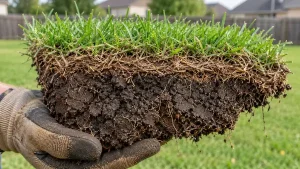
Thatch is a layer of living and dead plant material between grass and soil. Excess buildup can hold moisture and feed fungi.
To cut down on thatch and decaying debris:
- Have thick thatch assessed before dethatching, especially in St. Augustine, which can be damaged by aggressive equipment.
- Rake up fallen leaves, especially in fall.
- Remove decaying wood and old stump debris where practical; avoid disturbing living tree roots.
Let More Light and Air Reach Shaded Turf
Selective pruning can help shaded turf dry out better. Have an arborist assess larger limbs rather than cutting them just to clear mushrooms.
St. Augustine can tolerate some shade; however, Bermudagrass needs full sun and thins out quickly under trees, which leaves bare, damp soil that mushrooms thrive in.
Do You Need Fungicide to Get Rid of Lawn Mushrooms?
Usually, you don’t need fungicide to get rid of lawn mushrooms. Texas A&M AgriLife says fungicides generally aren’t recommended for a fairy ring in home lawns.
Treating the visible mushroom growth won’t remove the underlying food source or fix wet soil. Some fungicides can also damage warm-season grass if used incorrectly.
For lawn mushrooms, start with watering, drainage, and excess thatch. Have a professional diagnose damaged turf before choosing a treatment.
What About Vinegar, Baking Soda or Dish Soap?
You’ll find plenty of home remedies for lawn mushrooms online. Here’s how they stack up:
| Remedy | Does It Work? | The Catch |
| Vinegar | Not a reliable long-term solution | Can damage nearby grass without solving the underlying conditions |
| Baking soda | Little proven effect | Adds sodium to clay soil, which can hurt your grass over time |
| Dish soap | Little to no real effect | Can stress or damage turfgrass |
Save your time and skip these home remedies. Picking mushrooms and addressing persistent moisture avoids unnecessary damage to the grass.
When It’s Time to Check the Lawn, Not Just Pick the Mushrooms
A few mushrooms in the lawn after a rainy week are normal; however, there are some signs that can point to something bigger:
- Mushrooms keep returning during dry weather
- A ring or arc of brown grass is forming
- One spot stays soggy for days after watering
- Grass is thinning or turning brown in patches
- Clusters repeatedly appear above old stump debris or buried wood
Related Resources
From the CitiTurf Blog:
- Brown Patch Disease Identification
- Large Patch Disease in Lawns: Symptoms & Treatment
- The Ultimate Lawn Watering Guide
- Do I Need to Aerate My Lawn in Texas Every Year?
- Why Is My Sprinkler Pressure So Low?